
CSX Bridge Removal
Public Entity Coordination, Project Facilitation, ODOT
October 2011 thru July 2019
Project Overview
The CSX Upper River Bridge over the Maumee Demolition and base removal project included the removal of the structural steel (superstructure) of the CSX RR Bridge adjacent to the Ohio Turnpike. This project is a collaborative effort between the Ohio Department of Transportation (ODOT) and the Wood County Port Authority (WCPA). Funding for the project (nominally $2 million) will be provided by the WCPA through federal grant funds earmarked for the Bridges removal. Project administration was provided by The Ohio Department of Transportation.
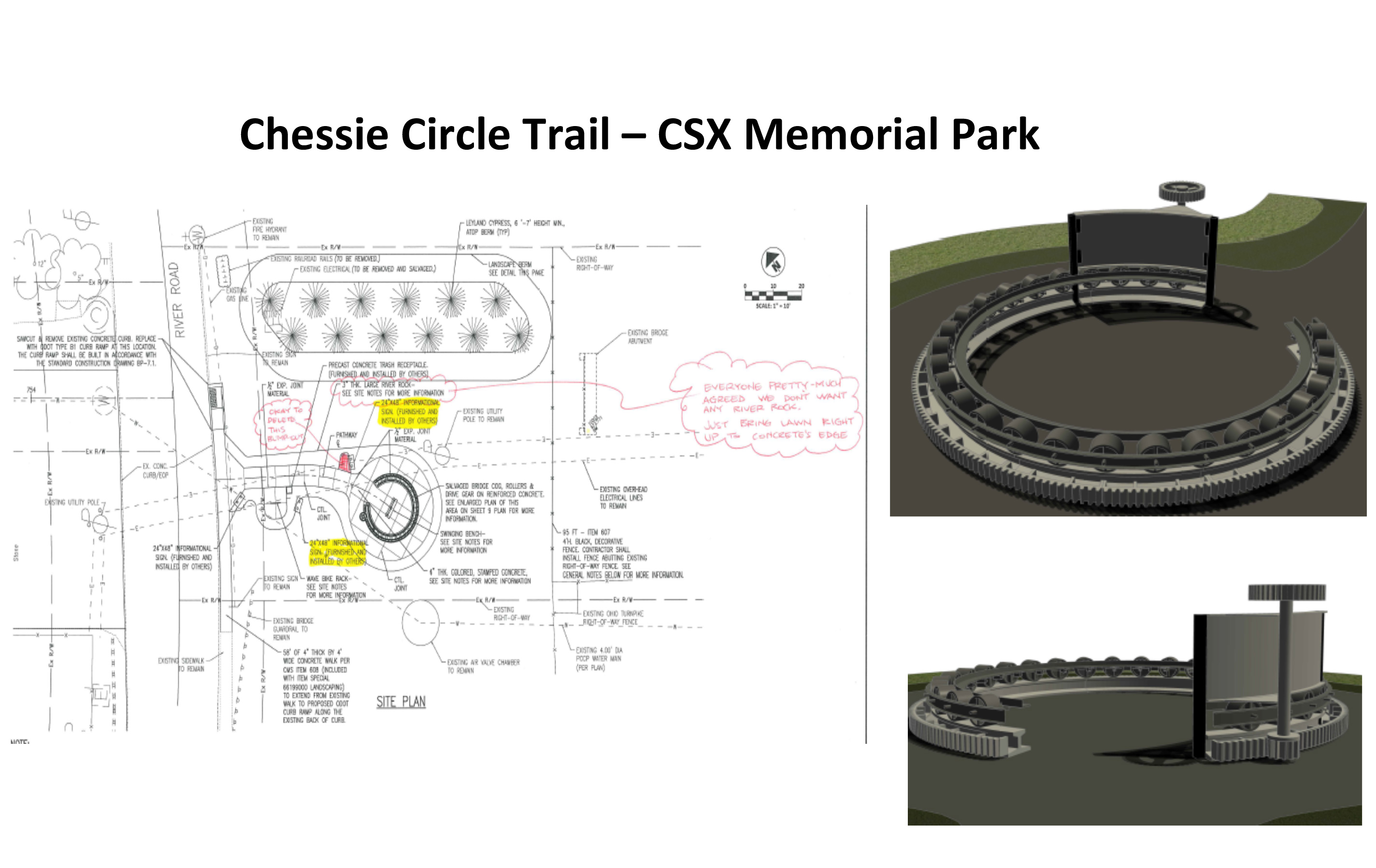
The 1902 Bridge was to become an integral part of the bike trail that was being built in Lucas County and was to transit across the Maumee River on a reconditioned historic span bridge which was part of the Toledo Terminal RR loop around Toledo.
Following WCPA exhaustive studies on the condition of the bridge and the ability to renovate it, as well as public hearings, the Port came to the conclusion that the only viable choice was for the bridge to be removed. An environmental impact study about fish, snails, crayfish was also completed. By 2017, the WCPA began working on bidding the demolition work to be completed.
BACKGROUND OF THE INVOLVEMENT OF THE WCPA
In late 2011, the backside or northern section of the rail corridor was sold by CSX to a consortium of partners who planned to develop it as a rail-to-trail. This section of the corridor ran from Laskey Road in Toledo southward to Bates Road in Wood County. The exception is the section from approximately Dorr Street to Glanzman Road in Toledo on which Norfolk Southern continues to operate under an easement agreement.
The Consortium members included the Trust for Public Land, Metroparks of the Toledo Area, University of Toledo, City of Toledo, Wood County Park District, Wood County Port Authority, and Toledo Metropolitan Area Council of Governments (TMACOG). Portions of the right of way were assigned to specific consortium members including Metroparks of the Toledo Area, University of Toledo, City of Toledo, Wood County Park District, and the Wood County Port Authority. These five entities are defined as the Contracting Parties. The WCPA’s involvement in this process was unique because part of the federal funding was dependent upon someone taking ownership of the Upper River CSX Bridge. The Wood County Port Authority was willing to take on this responsibility and to commence the process of analyzing the condition of the bridge.
HISTORY OF THE TOLEDO TERMINAL RR
The Toledo Terminal Railroad was completed in 1903. At one time, owned by most of the major railroad companies that passed through Toledo, it essentially formed a “loop” around the city, connecting the various industries to the railroads. It crossed the Maumee River in two places; the Upper Bridge and the Lower Bridge. In its heyday, the railroad was double-tracked all the way around the city of Toledo, except for the Upper Bridge.
Over the years, railroad companies merged, and finally, the Chesapeake and Ohio purchased the railroad in 1947, itself becoming CSX in the early 1980s. The TT formally came under CSX ownership in 1989. At the same time, local businesses along the track began to use trucks for transport, ending the use of the “backside” of the TT (the backside is the portion of the TT along the west side of the Maumee River) for originating traffic. Around this time, the backside was also “narrowed” from a double track to a single track.
Throughout the 2000s, the backside sat unused, with NS eventually removing the diamonds of the TT and the Chicago Main (Nasby) around 2006. Beginning in 2009, track removal crews began to tear out the track around Monroe Street. In early 2010, CSX filed for abandonment of the line, between Temperance, on the north side of Toledo, to Vulcan, where the TT and former NYC “Old Road Division” (also abandoned north of the Ohio and Michigan state line, see Ottawa Lake, MI to Riga, MI) diamond was. After permission was granted, full-fledged track removal began, with the entire backside from Temperance to the Upper Bridge torn out, minus the small, out of service segment from Gould to Nasby, and north of Nasby to Vulcan, a small amount which is still active. The portion from Medford Drive to Copeland Avenue was torn out in 1996.
The upper bridge itself was still standing, minus any decking and tracks until late 2018 when Miller Brothers began the demolition of the structure.
Project Images
Details
Project Name: CSX Bridge Removal
Type of Project: Project Facilitation – related to the Chessie Circle Trail, Public Entity Coordination
Total Size of the Project: $10 million
Contractor: Miller Bros
Funding Source:
- Federal grant of $2,000,000
- Consortium funding: $6.5 Million
Date of the Project: October 2011 thru July 2019
Tags: Public Entity Coordination, Project Facilitation, ODOT